
Hey everyone, another article of mine is out, this time about ACFS, on the Oracle Technology Network. In this article I present some characteristics of the ASM Cluster Filesystem and also how to configure it for use in your environment with Grid Infrastructure.
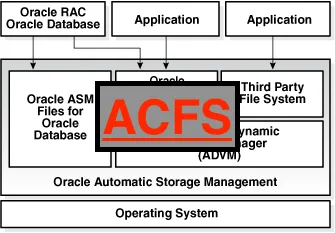
ACFS (Automatic Storage Management Cluster FileSystem) was introduced in the second release of Oracle 11g in 2009 and initially had no licensing cost, like the other components of the Grid Infrastructure product. In version 11.2.0.2 it was renamed CloudFS and, along with that, it came to have a licensing cost. In September 2014 Oracle made it free again, and it remains so to this day. You have no licensing cost to use any of the Grid Infrastructure components, but you can only do so if you own another licensed product, such as Oracle Database or Premier support for Oracle Enterprise Linux.
In the most recent versions of the Oracle Database Appliance, CloudFS (ACFS) became the default file system.
ACFS extends the ways ASM can be used and offers a scalable, multi-platform file system for storing any type of file, including audio, video or image files. It complies with the POSIX standards for Linux and Unix operating systems and also with Windows standards.
For ACFS to work we need to configure ADVM (ASM Dynamic Volume Manager), which is responsible for delivering and managing the volumes. These volumes can be part of a cluster and can also be formatted with other file systems besides ACFS, such as EXT4, EXT3, etc.
Read the full article on OTN: http://www.oracle.com/technetwork/pt/articles/database-performance/primeiros-passos-com-acfs-part1-3310211-ptb.html
I hope the article is useful and helps you broaden your knowledge.
Questions or suggestions, leave a comment. If you found the article interesting, share it so that more people can benefit.
A big hug and see you soon,
Franky
Comments